Posted by Jenny
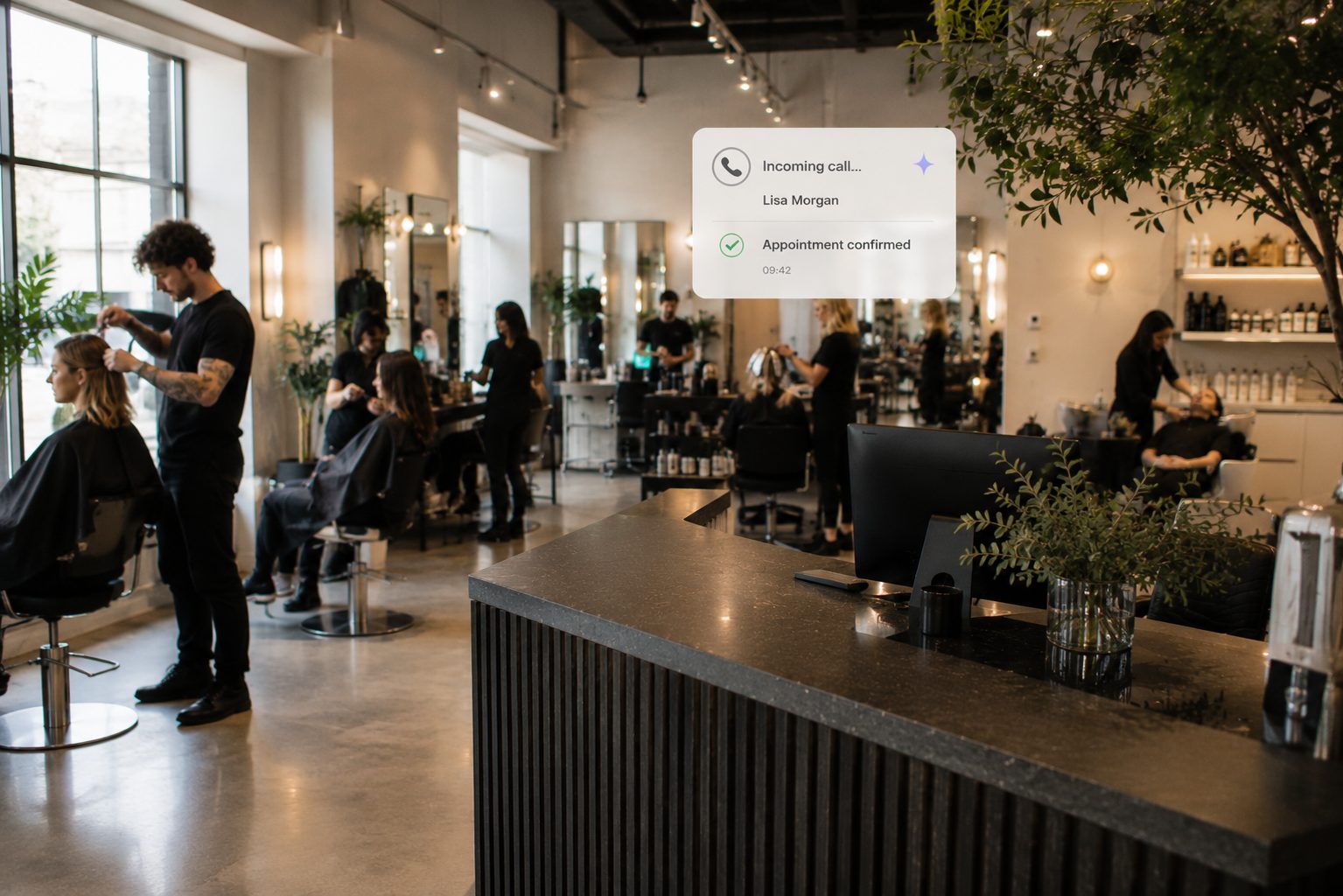
Why the real cost is not only the booking you lose. It is the attention taken away from the client already in front of you.
The phone starts ringing just as reception welcomes a client through the door.
Every chair is occupied. A stylist is halfway through a consultation while, behind a closed treatment room door, a therapist is with a client they simply cannot leave.
For a split second, everyone has the same thought.
I hope someone else gets that.
Anyone who has worked in a hair salon, beauty business, barbershop, spa or clinic will recognise the moment. It is so familiar that most teams barely question it anymore. For years, missed salon calls have been treated as one of those unavoidable realities of running a busy business.
But the ringing phone is not creating the problem. It is revealing one that has existed all along.
When we asked SalonIQ CEO Sam Kendall why this was a problem worth solving, we expected her to talk about AI, salon software or the future of customer service.
Instead, she told us a story.
Years before leading SalonIQ, Sam worked as a stylist. She remembers one particular day when the salon sent a marketing email to fill several quieter appointments. The campaign worked exactly as intended. Clients began calling almost immediately and, within minutes, the phone seemed to be ringing constantly.
It should have felt like a successful day for the business. Instead, it became one of the most stressful.
Even with a receptionist in the salon, the volume of calls quickly became overwhelming. Reception was welcoming clients, taking payments and keeping the salon running smoothly. Stylists were stepping away from consultations and colour appointments to help answer the phone.
Every interruption affected the client already sitting in front of them, yet every unanswered call risked disappointing another client who was trying to book.
Sam described it simply:
“We were in a catch-22 situation.”
Nobody in the salon was doing anything wrong. Every member of the team was trying to provide the best possible experience, whether that meant greeting a client, completing a consultation or answering the next call.
The real problem was that each decision required someone to divide their attention between two clients who both deserved it.
For years, we have described this as a phone problem. We now believe it is better understood as an attention and capacity problem. Once you see it that way, it becomes difficult to look at a ringing salon phone in quite the same way again.
When Conrad James from Callpad.ai described the cost of missed salon calls, he approached it from a different angle.
He did not begin with the phone or the technology. He began with everything a salon has already done to make that call happen.
A potential client rarely picks up the phone without first going through a much longer journey. They may have searched for a nearby salon, visited the website, looked through social media, read reviews, compared different businesses or asked someone they trust for a recommendation.
By the time they call, the salon has already earned their attention.
“You’ve done 99% of the work.”
The telephone call is often the final visible step between interest and an appointment. Behind it sits the time spent building a reputation, creating content, collecting reviews, maintaining a website and delivering the kind of client experience that people recommend to others.
Your salon marketing may have worked perfectly. The client has found the business, considered the options and decided that your salon is the one they want to contact. The breakdown happens at the point where that interest should become a booking.
This is why attracting more enquiries is not always the first growth opportunity.
For some salons, the more immediate opportunity is ensuring that the demand they have already created can reach the business and take the next step.
That hidden leak rarely appears in a report. You cannot easily measure the client who called once, received no answer and booked elsewhere. You do not see the appointment that was never created, the future rebookings that never followed or the recommendation that client might eventually have made.
You simply see a phone that has stopped ringing.
Not every unanswered caller will disappear. Existing clients may try again, leave a voicemail or use online booking. But asking them to make another attempt places the effort back onto the client at precisely the moment when the business should be making the journey easier.
A missed call also does not always represent a new client trying to book. It may be an existing client attempting to rearrange an appointment, ask a question or avoid cancelling altogether.
When that conversation remains unresolved, it can become a late cancellation, an empty space in the appointment book or even a no-show.
That can affect both short-term revenue and longer-term salon client retention. Rebooking and retaining existing clients gives salons greater visibility over future appointments, team utilisation and business forecasting.
The irony is difficult to ignore: the harder a salon works to generate demand, the more pressure that demand can place on the team expected to manage it.
Success creates its own capacity problem.
The answer cannot simply be to ask the team to move faster, interrupt more appointments or keep one ear permanently tuned to the phone. There comes a point where working harder begins to damage the experience that made the salon successful in the first place.
The question therefore changes.
“How can our team answer more calls?”
It becomes:
“How can every caller receive the help they need without taking attention away from the client already with us?”
Once callers can get the help they need without pulling somebody away from an appointment, the rhythm of the salon begins to change.
Reception can welcome the client who has just arrived. Stylists and therapists can remain present during consultations and treatments. Salon owners no longer experience the same jolt of anxiety each time the phone rings while everybody is occupied.
The word we hear most often from salons using IQ Connect is not efficiency or automation.
It is relief.
The pressure created by a constantly ringing phone is easy to underestimate. Even when nobody answers, the sound demands attention. Someone notices it, wonders whether they should stop what they are doing and worries that a booking may be disappearing.
The call may last only a few seconds, but the distraction can remain long after it ends.
Removing that pressure gives the team permission to stay where their attention is needed most. It also creates a better experience for the person calling.
Rather than reaching voicemail and wondering whether anybody will return their message, a client can receive immediate help with a routine request. They may be able to book, cancel, reschedule or request human support when a more personal response is needed.
The results suggest that clients are far more willing to use this option than many salon owners initially expect.
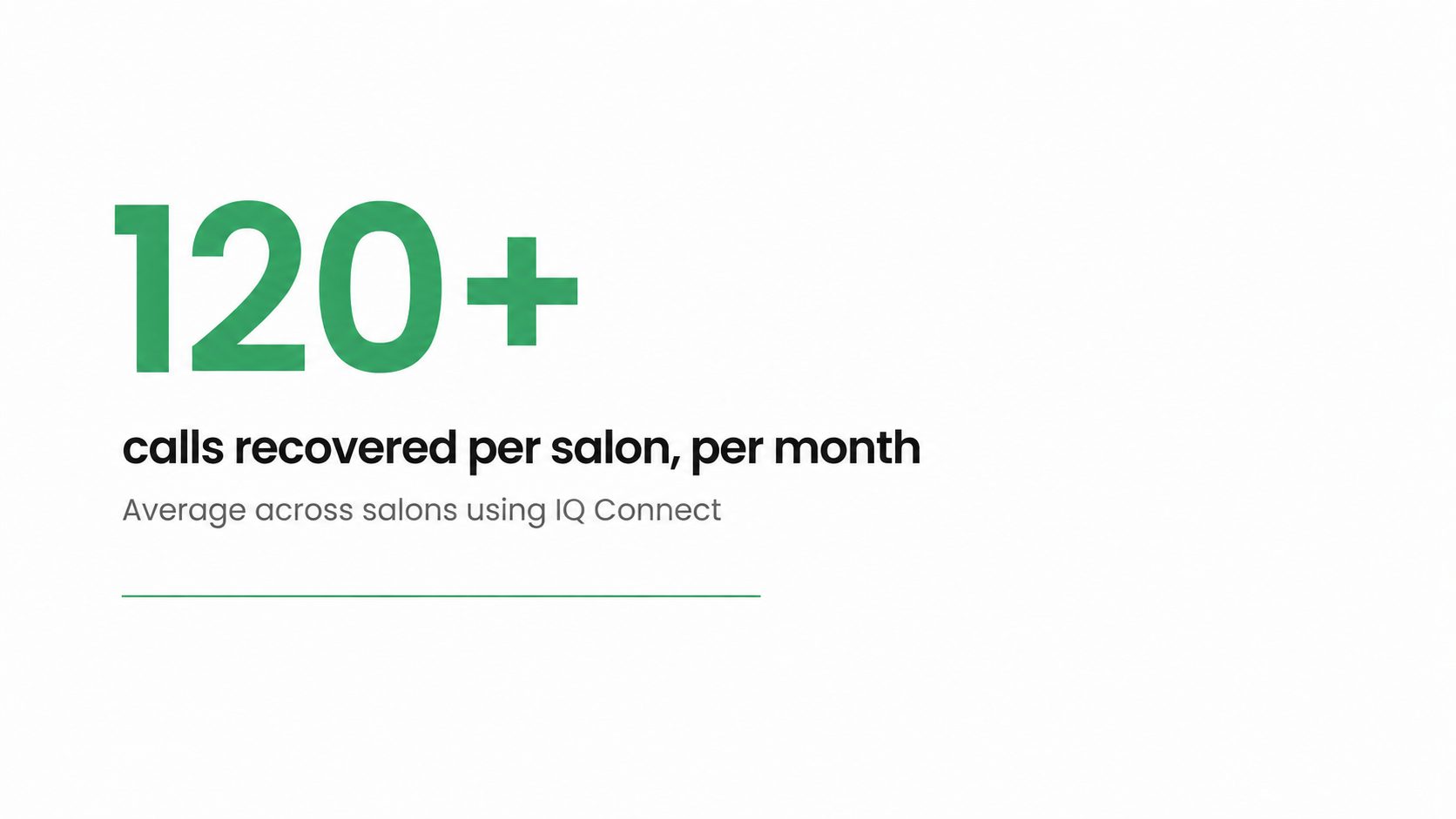
Across salons using IQ Connect, the average business is now recovering more than 120 calls each month. When callers are trying to book, cancel or reschedule, around 60 to 70% of those requests are completed successfully.
One result surprised SalonIQ and Callpad.ai more than most.
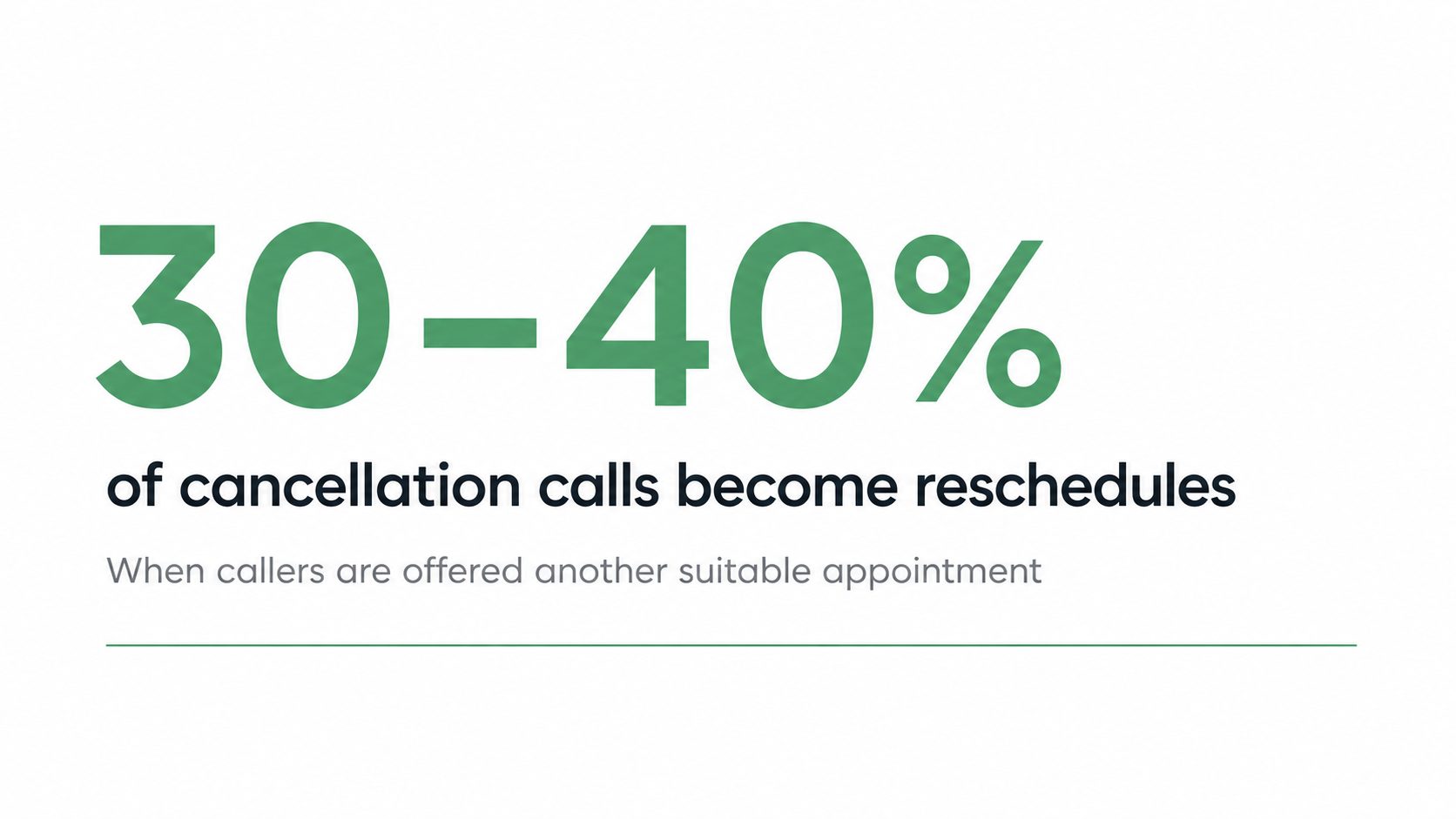
When a client calls to cancel, IQ Connect can check availability and offer another suitable appointment before the original booking is released. Around 30 to 40% of callers who intended to cancel choose to reschedule instead.
This has a direct commercial effect.
A cancellation that arrives through voicemail often becomes another job for the team to handle later. By the time somebody listens to the message, updates the appointment book and begins trying to refill the space, the opportunity may have passed.
Resolving the request during the original call protects the client relationship and gives the salon a far better chance of keeping the booking and its associated revenue.
This is the important distinction:
Answering the phone is useful. Completing the task is far more valuable.
Many answering services leave a business with a longer list of messages. IQ Connect is designed to leave the team with completed actions, alongside the smaller number of conversations that genuinely require a person.
Through its connection with SalonIQ, routine calls can be handled using live appointment availability and the rules set by the salon. The system can book directly into the appointment book, support clients during busy periods and pass the conversation to the team when a human response is required.
SalonIQ’s AI receptionist for salons is designed to work alongside the team rather than replace it.
A message does not remove work. It postpones it.
A completed booking does.
One of the clearest examples came from a salon group with several locations.
The first salon began using IQ Connect while the other locations continued with their usual front-of-house processes. A receptionist from one of the salons without IQ Connect later spent a day working in the location that had it.
Her response was immediate:
“When do we get it?”
She did not see the technology as a threat to her role. She saw all the other valuable work she could complete when she was no longer tied to the desk waiting for the next call.
That reaction challenges one of the most common fears surrounding AI in service-led businesses.
When repetitive and time-sensitive tasks are handled consistently, people gain more capacity for the work that genuinely requires them: welcoming a nervous new client, resolving a complicated enquiry, supporting colleagues and creating the kind of personal experience technology cannot replicate.
The purpose is not to build salons with fewer people.
It is to help the people already there spend more of their time being human.
The arrival of AI has created an understandable tension in service-led industries.
Salon owners have spent years building businesses around trust, conversation and personal relationships. Anything that sounds as though it could make the client experience less human will naturally be met with caution.
That caution is healthy.
A salon is not a warehouse, a call centre or a faceless transaction. It is one of the few places where people still expect to be recognised, listened to and cared for by somebody who knows them.
For many clients, the relationship is as important as the service itself.
The right question is not simply whether AI belongs in a salon.
It is where it belongs.
Technology should take care of the moments that do not require a person, so people have more time for the moments that do.
That might mean answering a call while the team is with clients, helping somebody move an appointment or checking live availability. It can also mean passing on the smaller number of conversations that genuinely need judgement, reassurance or a personal response.
It should never replace the relationship. It should protect it.
One of the biggest misconceptions surrounding AI is that its value lies in doing the same work as people more cheaply. In a salon, its most useful role is different.
It can reduce the interruptions, repetitive tasks and unfinished conversations that pull experienced team members away from the work only they can do.
Conrad describes this as taking a manageable portion of the daily task list and handing it to technology. Not every task and not every conversation. Just the work that is predictable, time-sensitive and possible to resolve consistently.
The result should not be an empty reception desk or a less personal salon. It should be a team with more capacity to notice, listen and respond properly.
Many salon owners initially worry that clients will reject an AI-assisted call experience. In practice, the greater frustration is often voicemail.
Clients do not know whether their message has been heard, when they will receive a reply or whether they should simply try another salon. A clear route to book, reschedule, ask a question or request human assistance can make the experience more useful, not less personal.
The same principle applies to the team.
A receptionist who is no longer tied permanently to the phone is not less important. They are more available to welcome clients, solve complex problems and support the flow of the business.
A stylist who can remain present throughout a consultation is not being replaced. They are being protected from an interruption that adds little value to either client.
This is the future we believe in: not salons with fewer people, but salons where people have more time to do the work that makes them irreplaceable.
The scale of the conversation around AI can make it feel as though every salon needs to transform its entire operation overnight.
That is rarely the best place to start.
A more practical approach is to identify one problem that creates pressure every day and solve that first.
For many salons, missed calls are a clear example. The problem is easy to recognise and the outcome is possible to measure.
Starting with one defined problem gives salon owners greater control. AI should not be something done to a business. It should be adopted deliberately in areas where it supports the way that business already wants to operate.
That is why the partnership between SalonIQ and Callpad.ai matters.
The goal was not to add a generic telephone answering service and label it innovation. It was to create a salon-focused AI receptionist that works with appointment information, client records and the rules chosen by each business.
You can learn more about how an AI receptionist works in a salon and the types of calls it can support.
The technology adapts to the salon rather than requiring the salon to adapt to it.
Salon growth is often described in terms of more: more leads, more bookings, more marketing and more activity.
Yet sometimes the most valuable growth comes from protecting what is already there.
It comes from ensuring that the client who has found you can reach you. It comes from helping a cancellation become a reschedule. It comes from reducing the pressure that causes brilliant team members to divide their attention across too many things at once.
It also comes from creating a business where clients feel looked after before they arrive, while they are with you and whenever they need to get in touch.
That is the kind of growth worth building: growth that protects revenue without weakening relationships, gives the team room to do their best work and makes the salon feel better, not simply busier.
For salon owners who recognise this challenge, IQ Connect offers a practical place to begin. Not as a replacement for the people who make the salon special, but as support for them.
Because when the phone rings next time, the goal is not simply that somebody answers. It is that nobody has to stop giving their full attention to the client already in front of them.
IQ Connect is SalonIQ’s AI-powered receptionist, created with Callpad.ai to help salons answer calls, book appointments, manage cancellations and reschedule clients when the team cannot reach the phone.
It handles routine requests immediately and passes on the conversations that genuinely need a person.
For salon owners, the benefit is not simply more answered calls. It is fewer missed opportunities, less pressure on the team and greater confidence that clients can reach the business without interrupting the experience already taking place in the salon.
SalonIQ Perspectives explores the challenges shaping the future of salon business, technology and client experience.
Discover how SalonIQ’s AI receptionist can help your salon recover missed calls, protect appointments and give your team more time to focus on clients.
Call a member of our team today on 01892 280 123