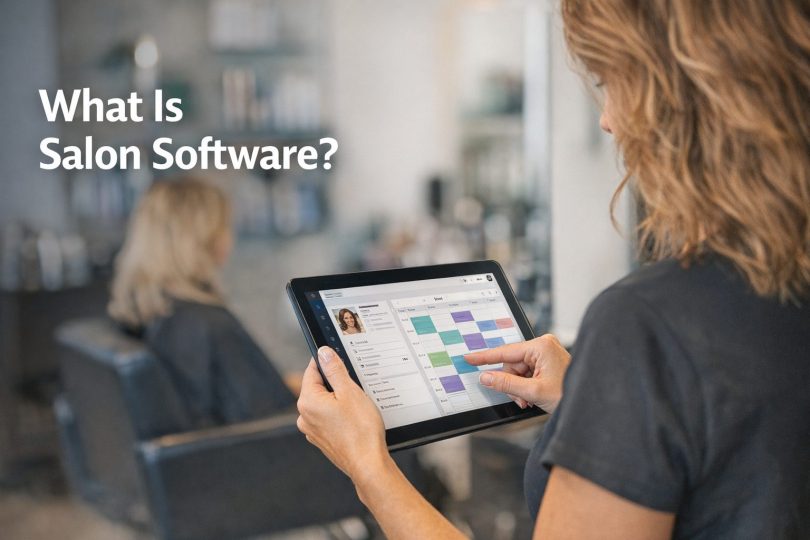
This guide explains how UK salon owners can compare salon software fairly, understand the differences between popular platforms, and choose the option that best fits their business model, priorities, and stage of growth.
HOW TO READ THIS GUIDE
The phrase “best salon software” can mean very different things depending on how a salon operates, its size, and what the owner values most.
This guide is not a ranked list or a winner-takes-all comparison. There is no single salon software platform that is best for every business.
Instead, this guide is designed to help UK salon owners understand how different salon software platforms are built, what they prioritise, and the types of salons they tend to suit best.
Rather than asking which platform is objectively the best, this guide focuses on a more practical question:
Which salon software is the best fit for your business model, stage, and priorities?
Choosing the best salon software in the UK depends on how a salon operates, how it plans to grow, and what trade-offs the owner is willing to make.
There is no single salon software platform that is best for every business. Different systems are designed around different operating models, pricing structures, and levels of control.
This guide explains how to compare salon software used in the UK, what criteria matter most, and how different types of platforms suit different kinds of salons. Its purpose is to support informed decision-making rather than promote a single option.
Salon software used in the UK needs to support local business requirements, regulations, and customer expectations.
Key considerations include:
Software that works well in other markets may not always meet these expectations, which is why UK-specific suitability matters.
Comparing salon software fairly means looking beyond feature lists and focusing on how each system fits a salon’s day-to-day operation and longer-term plans.
This guide compares platforms using the following criteria.
No single platform will score highest on every factor. Understanding these trade-offs helps salon owners choose software that aligns with how they want their business to run. Before comparing features, it helps to understand what salon software actually is and what it includes.
Salon software platforms in the UK generally fall into a small number of categories. Understanding these categories helps narrow down which type of system is most appropriate.
These platforms combine booking, client management, payments, staff management, and reporting in a single system.
They suit salons that want centralised control and clear visibility across the business.
Trade-offs may include higher monthly costs compared to simpler tools.
Booking-focused platforms prioritise appointment scheduling and online bookings, often with limited operational features.
They suit salons that mainly want to reduce phone bookings and manage availability.
Trade-offs may include the need for additional tools as the business grows.
Marketplace platforms combine salon software with client discovery and public listings.
They suit salons that value exposure to new clients through a marketplace.
Trade-offs often include transaction fees, reduced pricing control, and limited ownership of client relationships.
These systems start with point-of-sale functionality and add booking tools on top.
They suit salons where retail and in-person payments are a primary focus.
Trade-offs may include less flexible booking and calendar management.
Phorest is an all-in-one salon management software platform used by hair and beauty salons in the UK and internationally. It combines appointment booking, client management, payments, staff management, marketing tools, and reporting within a single system.
Phorest is typically positioned as a full operational platform designed to support established salons with multiple staff members.
Phorest is commonly used by:
It may be less suitable for very small or early-stage salons due to cost and complexity.
Slick is a salon management and online booking platform used by hair and beauty salons in the UK. It focuses primarily on appointment booking, calendar management, and basic client records, with additional features available depending on the plan.
Slick is often positioned as a simpler alternative to larger all-in-one systems, with an emphasis on ease of use and quick setup.
Slick is commonly used by:
It may be less suitable for salons that require advanced reporting, complex staff management, or built-in marketing tools.
Fresha is a booking and business management platform used by hair, beauty, and wellness businesses in the UK and internationally. It combines appointment booking with marketplace-style client discovery, allowing consumers to find and book salons through the Fresha platform.
Fresha positions itself as a platform that reduces upfront software costs by monetising through transaction-based fees and additional services.
Fresha is commonly used by:
It may be less suitable for salons that want full control over pricing, client relationships, and long-term cost predictability.
SalonIQ is a salon management software platform designed for UK hair and beauty salons. It focuses on providing a software-first system for managing bookings, clients, staff, and day-to-day salon operations without relying on a consumer marketplace.
SalonIQ is positioned as an all-in-one platform that prioritises operational clarity, predictable pricing, and control over client relationships.
SalonIQ is commonly used by:
It may be less suitable for businesses that primarily rely on marketplace-driven client discovery or require very large enterprise feature sets.
Different salon business models tend to prioritise different features, pricing structures, and levels of control. Understanding these differences can make it easier to narrow down which type of salon software is likely to be the best fit. The right platform should support growth, including how the right software can increase salon revenue.
Independent, single-location salons often prioritise simplicity, control, and predictable costs.
Key considerations typically include:
Easy-to-manage booking and diary tools
Clear visibility of appointments, clients, and payments
Software that does not add complexity or unnecessary features
Pricing that remains stable as the salon grows
Many independent salons prefer systems that allow them to own the client relationship directly, rather than relying on third-party marketplaces. For these businesses, ease of use and clarity often matter more than advanced multi-location reporting.
The main trade-off is usually between simplicity and feature depth. Some platforms offer quick setup and low friction but may feel limiting over time as the business becomes busier.
Salons with larger teams often need software that supports coordination, visibility, and consistency across staff members.
Common priorities include:
Staff scheduling and permissions
Clear allocation of appointments across the team
Consistent booking rules and service durations
Reporting that helps owners understand performance by staff member or service
As team size grows, manual systems and basic booking tools can become harder to manage. Multi-staff salons often benefit from software that reduces admin overhead and helps maintain consistency, particularly during busy periods.
The trade-off here is usually between flexibility and control. More advanced systems may require more setup and training, but they often provide better long-term operational stability.
Multi-location salon groups typically prioritise oversight, scalability, and standardisation.
Key requirements often include:
Centralised reporting across locations
Consistent pricing, services, and booking rules
Role-based access and permissions
Software that can scale without significantly increasing admin workload
For salon groups, visibility across locations is often more important than simplicity at an individual site level. These businesses tend to value systems that support strategic decision-making and long-term growth.
The main trade-off is complexity. More powerful systems can require greater upfront investment in setup and onboarding, but they are usually better suited to managing scale over time.
While salon size and structure provide a useful starting point, the best software choice ultimately depends on how the business operates and what the owner values most.
Two salons of similar size may choose very different platforms depending on whether they prioritise control, exposure, predictability of costs, or depth of reporting.
Using salon type as a lens, rather than a rule, helps owners choose software that supports both current needs and future direction.
Choosing salon software is often a long-term decision, but many salons make their choice based on short-term needs or incomplete information. Understanding common pitfalls can help avoid costly or disruptive changes later.
One of the most common mistakes is choosing salon software solely because it appears cheaper at the start.
Low upfront cost does not always reflect long-term value. Platforms with low or no subscription fees may rely on transaction charges, add-ons, or usage-based pricing that increases as booking volume grows.
Focusing only on initial cost can lead to higher total spend over time or limitations that require switching systems later.
Free plans can be tempting, but it’s worth asking whether free salon software is really free
Some pricing models feel affordable when a salon is quiet but become harder to manage as demand increases.
Transaction-based fees, commission on bookings, or paid feature upgrades can gradually raise costs without being immediately obvious. Over time, this can make budgeting and forecasting more difficult.
Understanding how costs scale as the business grows helps avoid unexpected increases later on.
Client data is one of a salon’s most valuable assets, yet it is often overlooked during software selection.
Some platforms place limits on how client data can be accessed, exported, or used. Others position themselves between the salon and the client relationship.
Failing to consider data ownership and control can restrict marketing, communication, and flexibility if the salon wants to change systems in the future.
Many salons stay with software that no longer fits their needs because switching feels disruptive or time-consuming.
Delaying a switch can lead to inefficiencies, rising costs, or missed opportunities as the business grows. While changing systems does require planning, doing so earlier is often less disruptive than waiting until problems become more severe.
Choosing software with scalability in mind can reduce the likelihood of needing a major change later.
Software that looks good on paper may not work well in practice if it is difficult for staff to use consistently.
If booking rules, schedules, or workflows are unclear, teams may work around the system rather than with it. This can reduce the value of even the most feature-rich platforms.
Considering usability and training requirements helps ensure the software supports daily operations rather than adding friction.
SalonIQ is a subscription-based salon management platform designed for UK hair and beauty businesses that want clarity, control, and predictable software costs.
Rather than operating as a marketplace or discovery platform, SalonIQ focuses on supporting salons in managing their own bookings, clients, teams, and day-to-day operations within a single system.
The platform is built to help salons run their business more effectively, rather than relying on third-party exposure to drive demand.
SalonIQ provides tools for appointment booking, client management, team scheduling, reporting, and operational oversight.
It is designed to give salon owners visibility into how their business is performing, with clear booking rules, structured workflows, and reporting that supports informed decision-making.
SalonIQ uses a subscription pricing model, which means costs are predictable and not tied directly to booking volume or transaction fees.
SalonIQ is commonly chosen by:
Independent UK hair and beauty salons
Owner-operated or manager-led businesses
Salons that want direct control over bookings and client relationships
Businesses that prefer predictable monthly software costs
Salons planning to grow without significantly increasing admin complexity
It tends to suit salons that value operational clarity, consistency, and long-term stability over short-term exposure through marketplaces.
SalonIQ may be less suitable for:
Businesses that rely heavily on marketplace platforms for client discovery
Salons looking for a free or commission-based pricing model
Very early-stage or temporary setups where minimal functionality is the priority
For these businesses, platforms that prioritise exposure or low upfront cost may feel more appropriate, at least in the short term.
There is no single best salon software for every UK salon. The best option depends on factors such as salon size, booking volume, budget, and how much control the business wants over pricing and client relationships. Comparing platforms based on fit rather than popularity usually leads to better long-term decisions.
Free salon software can work for some UK salons, particularly those with low booking volumes or limited budgets. However, free platforms often charge transaction fees or additional costs as usage increases, which can make them more expensive over time. Understanding the full pricing model is important before choosing a free option.
Yes. UK salons are responsible for handling client data in line with GDPR requirements. Salon software should support this by offering secure data storage, access controls, and clear data management practices, but compliance also depends on how the salon uses the system.
Salon software pricing in the UK varies depending on features, business size, and pricing model. Some platforms charge a monthly subscription, while others use per-appointment or transaction-based fees. The most important consideration is how costs scale as the salon grows.
Most salons can switch software, but the ease of switching depends on data migration, staff training, and how established existing processes are. Choosing software that allows data export and provides onboarding support can make switching easier if the salon’s needs change.
If you are comparing different salon software options, seeing how platforms work in practice can help clarify which system best fits your business.
You may find it useful to: – View a summary of how SalonIQ works – Compare SalonIQ with other UK salon software platforms
These resources are intended to support evaluation rather than push a particular choice.
Call a member of our team today on 01892 280 123